You just received an amazing job offer from “Apex Global Solutions.” Or maybe you are about to invest in a startup that claims to be “The Future of Tech.”
Their website looks professional. They have a logo. They even have a “Meet the Team” page.
But do they actually exist?
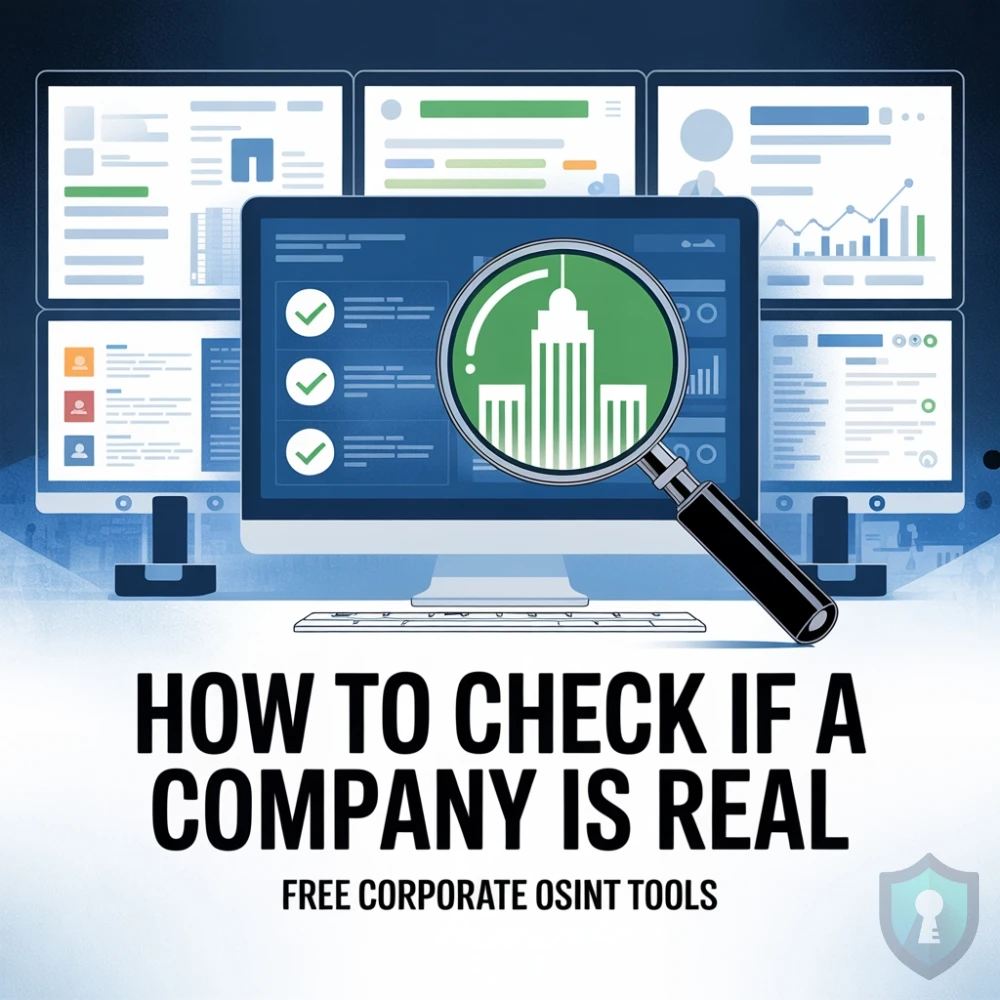
Scammers can build a fake corporate website in 20 minutes. But faking a government registration or a physical footprint is much harder. Here is how to verify if a company is real or just a ghost.
Method 1: OpenCorporates (The Global Registry)
A website is not a business license. If a company is real, it must be registered with a government. OpenCorporates is the largest open database of companies in the world.
How to use it:
- Go to OpenCorporates.com.
- Enter the company name.
- Filter by Country (e.g., US, UK).
The Red Flags:
- No Record: If they claim to be a “Global Leader” but aren’t in the registry, run.
- The Date Trick: Their website says “Established 1995,” but the registry says “Incorporated: 2 months ago.” This is a classic scam sign.
- Status: Ensure the company status is “Active” and not “Dissolved.”
Method 2: The “Ghost Employee” Check (LinkedIn)
A real company has real people working for it. Scammers often populate their “Team” page with stock photos or AI-generated faces.
How to check:
- Search for the company on LinkedIn.
- Click on the “People” tab to see who works there.
What to look for:
- Zero Employees: A “Global Firm” with only 1 employee (the CEO) is suspicious.
- The “Generic” Profile: Do the employees have generic names like “John Smith” and no profile picture?
- Reverse Search the CEO: Take the photo of the “CEO” from their website and run it through Google Lens. If that face appears on a stock photo site labeled “Confident Business Man,” it’s a scam.
Method 3: The Address Test (Google Maps)
Every registered company needs a physical address. Scammers often use “Virtual Offices” or random residential houses.
How to check:
- Find the address on their website (usually in the Footer or “Contact Us” page).
- Paste it into Google Maps and switch to Street View.
The Verdict:
- Real: You see an office building with their sign on it.
- Fake: You see a UPS Store, a random house in the suburbs, or an empty parking lot.
- Note: Many remote startups use virtual addresses (like WeWork), but if they claim to be a “Manufacturing Giant” and are based in a PO Box, it’s a lie.
Summary: The Legitimacy Checklist
| Check | Tool | Goal |
|---|---|---|
| Legal Status | OpenCorporates | Is the company legally registered? |
| Employee Check | LinkedIn / Reverse Image | Are the employees real humans? |
| Physical Check | Google Maps | Is the office a real building? |
The Bottom Line
Don’t trust the website; trust the paperwork.
If a company isn’t on OpenCorporates, has stock photos for employees, and operates out of a UPS Store, it doesn’t matter how nice their website looks. It is a shell.
Next Step: If you found a suspicious website during your check, use our Website Owner Guide to see exactly when the domain was registered.