You found a suspicious website. Maybe it’s a crypto investment platform, a fake news blog, or an online store with “too good to be true” prices.
You want to know who is running it.
You probably already tried a standard “Whois” lookup and saw the dreaded message: “Redacted for Privacy” or “GDPR Masked.” Most people give up there.
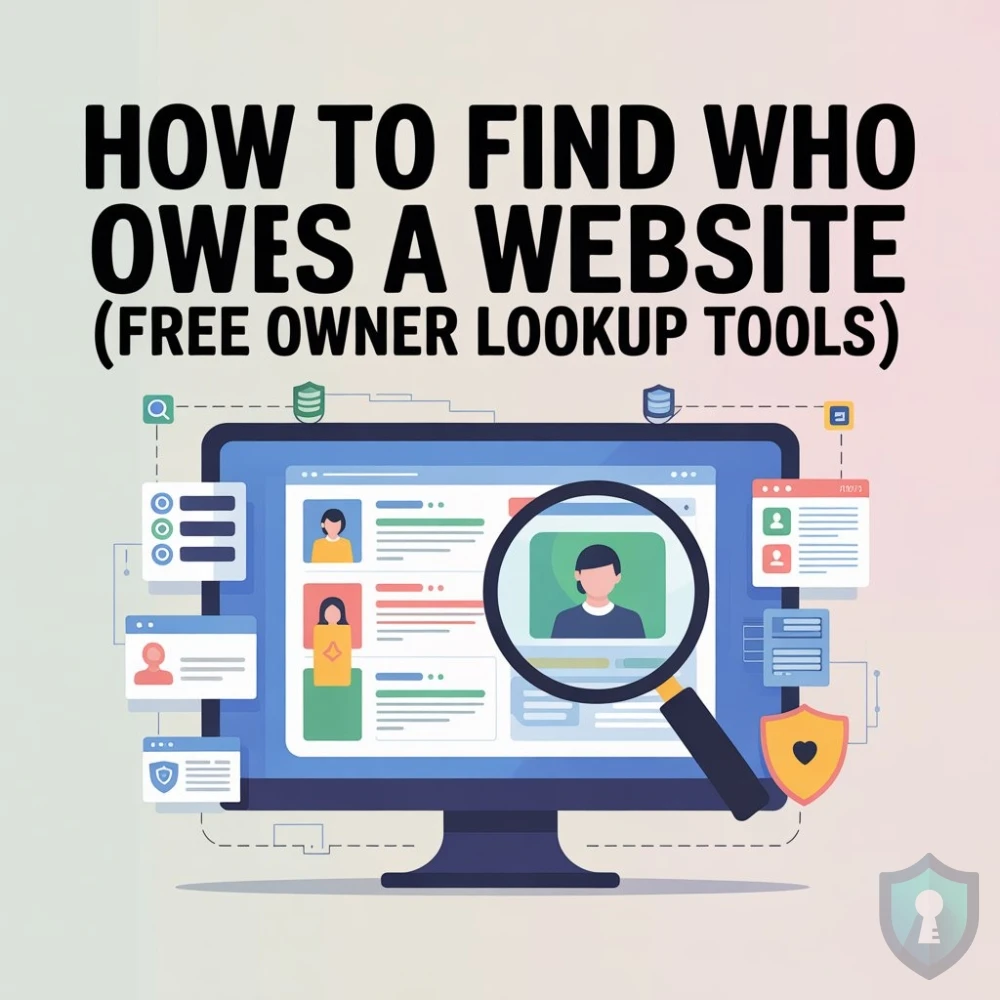
Professional investigators don’t. Just because the owner is hidden today doesn’t mean they were hidden yesterday. Here is how to bypass the privacy shield and find the real owner of a website.
Method 1: Whoxy (The Time Machine)
Most scammers buy a domain and immediately turn on “Privacy Protection.” But sometimes, they forget to turn it on for the first few days, or they owned the domain for years before deciding to use it for a scam.
Whoxy lets you see the History of the domain.
How to use it:
- Go to Whoxy.com.
- Enter the domain name (e.g.,
suspicious-site.com). - Scroll down to “Whois History.”
The Trick: Look for records from 1 or 2 years ago.
- Current Record: “Data Redacted, Iceland.”
- 2022 Record: “Registered to: John Smith, Ohio.”
- Gotcha: The owner is likely the same person; they just turned on privacy later.
Method 2: BuiltWith (The “Fingerprint” Search)
If the name is hidden, look at the code.
Scammers often run networks of 50+ websites. They use the same templates, the same ad accounts, and the same analytics codes on all of them.
How to use it:
- Go to BuiltWith.com.
- Enter the domain.
- Look for the “Relationship Profile” or “Connected Websites” tab.
What it reveals: It will show you every other website that uses the same Google AdSense ID or Google Analytics ID.
- Example: You search
FakeCrypto.com. BuiltWith tells you it shares an ID withJohnsPersonalBlog.com. - Now you have a name.
Method 3: ICANN Lookup (The Official Check)
Before you do the deep dives, always run a quick official check. Sometimes scammers are lazy and leave their real phone number in the registration data.
How to use it:
- Go to lookup.icann.org.
- Enter the domain.
- Scroll down to “Contact Information.”
What to look for: Ignore the “Registrant Name” (it will likely say “Privacy Inc”). Look at the Tech Contact or Admin Contact. Sometimes the owner hides their personal name but leaves their real email address in the “Tech” field for billing purposes.
Summary: The “Privacy Bypass” Checklist
| Step | Tool | Goal |
|---|---|---|
| 1. The Quick Check | ICANN Lookup | See if they were lazy and left data public. |
| 2. The Time Machine | Whoxy | See who owned it before privacy was turned on. |
| 3. The Tech Map | BuiltWith | Find other websites connected to the same owner. |
The Bottom Line
“Privacy Protection” is not a magic shield. It only hides the current data. By looking at the History (Whoxy) and the Code (BuiltWith), you can usually find the person behind the screen.
Once you have a name or email, use our Reverse Email Guide to finish the investigation.