If you use a Dark Web Search Engine to find an underground marketplace or a hacking forum, there is a very high probability that the link you click will be fake.
Because .onion URLs are complex, 56-character strings of random letters and numbers, it is incredibly easy for hackers to create pixel-perfect clones of popular dark web sites. If you log into one of these fake “phishing” sites, the attacker immediately steals your credentials and drains your cryptocurrency wallet.
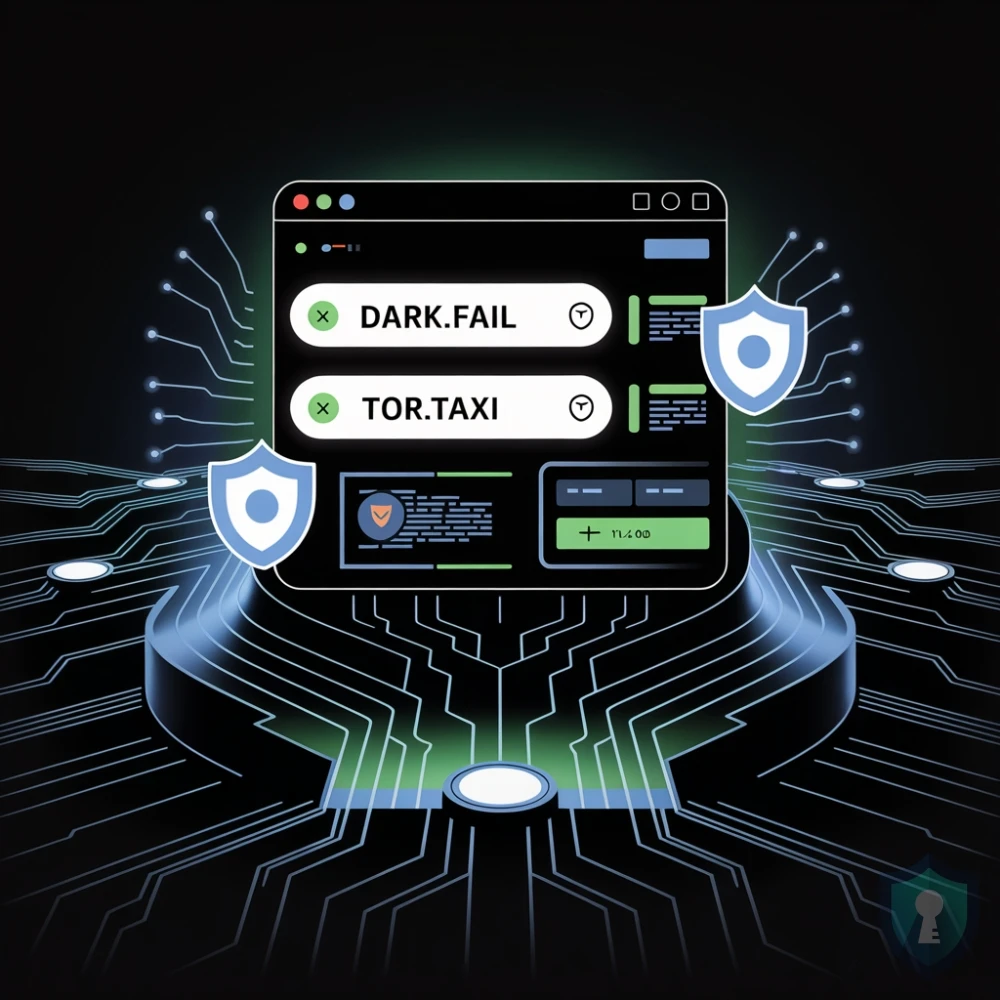
To survive in an environment without Google or verified SSL certificates, professional Open Source Intelligence (OSINT) investigators do not rely on search engines to find specific platforms. Instead, they use Curated Directories-specifically, Tor.Taxi and Dark.Fail.
Here is exactly how these directories work, why they are essential for your OPSEC, and how to use them safely.
The Dark Web Phishing Epidemic
On the surface web, if you want to go to Twitter, you type twitter.com. If a hacker sets up a fake site at twittter-login.com, it is relatively easy to spot the scam.
On the Dark Web, a legitimate URL looks like this: expyuz5tat... (56 characters) ...3ad.onion
A malicious phishing URL looks like this: expyuz5tbt... (56 characters) ...3ad.onion
Because humans cannot memorize these strings, threat actors flood dark web search engines and Reddit forums with their fake links. The moment you enter your username, password, or Bitcoin PIN into the fake site, it is gone forever. To combat this, the dark web community created heavily guarded, PGP-verified directories.
What are Tor.Taxi and Dark.Fail?
Tor.Taxi and Dark.Fail are not search engines. You cannot type a query into them. They are static address books that list the official, verified .onion links for the most heavily trafficked dark web forums, marketplaces, and services.
1. Dark.Fail (The Veteran Directory)
For years, Dark.Fail was the undisputed king of dark web directories. It features a minimalist, text-only interface and tracks the uptime of major hidden services.
- How it works: The administrators of Dark.Fail maintain direct contact with the administrators of dark web marketplaces. When a marketplace changes its
.onionlink to avoid a DDoS attack, Dark.Fail updates its list. - The Catch: Because of its immense popularity, Dark.Fail is frequently the target of massive extortion and DDoS attacks, meaning the site itself is often offline. Furthermore, ownership disputes in the past have led to temporary compromises, reminding users that no site is 100% immune to takeovers.
2. Tor.Taxi (The Modern Standard)
As Dark.Fail suffered prolonged downtimes, Tor.Taxi emerged as the new gold standard for OSINT investigators and deep web researchers.
- How it works: Tor.Taxi offers a cleaner interface and has proven to be incredibly resilient against DDoS attacks. It categorizes links by Marketplaces, Forums, Wallets, and Communications.
- The Advantage: Tor.Taxi provides links not just for the Tor network, but also for I2P (the Invisible Internet Project), making it a more versatile tool for modern threat intelligence.
The Golden Rule: Trust, but Verify (PGP)
While Tor.Taxi and Dark.Fail are highly trusted, a core tenet of OPSEC is that you never trust a single point of failure. If a hacker managed to compromise the server hosting Tor.Taxi, they could swap all the legitimate marketplace links with their own phishing links.
To prevent this, investigators use PGP (Pretty Good Privacy).
Every legitimate dark web directory and marketplace has a unique cryptographic identity called a PGP Key.
- The directory (like Tor.Taxi) publishes a message containing the new
.onionlinks. - They cryptographically “sign” this message with their private PGP key.
- You, the user, verify that signature using their public PGP key.
If the signature matches, you know with 100% mathematical certainty that the link was provided by the real administrator and not a hacker who compromised the website. Never use a link for financial transactions without verifying its PGP signature.
Investigator OPSEC Rules for Directories
If you are using Tor.Taxi or Dark.Fail for your research, adhere strictly to these operational guidelines:
- Never Use a Surface Web Proxy: You will often see surface web links like
tor.taxiordark.fail. While these are sometimes maintained by the actual administrators to help users find the official.onionlinks, they offer zero privacy. Your ISP can see you visiting them. Always use the Tor Browser, and only navigate to the.onionversions of these directories. - Keep Your VPN Active: Even when browsing directories, your VPN must be running to hide your initial connection to the Tor network from your internet provider.
- Bookmark the Verified Link: Once you have used PGP to verify the official
.onionlink for Tor.Taxi or Dark.Fail, save it securely in an offline password manager or encrypted text file. Never rely on your memory.
Summary: Search Engines vs. Directories
| Feature | Dark Web Search Engines (e.g., Haystak, Torch) | Curated Directories (e.g., Tor.Taxi, Dark.Fail) |
|---|---|---|
| Primary Function | Indexing millions of raw .onion pages. | Providing verified links to major platforms. |
| Phishing Risk | Extremely High. Search results are unfiltered. | Low. Links are vetted and PGP signed. |
| Best Used For | Finding specific technical data, niche forums, or keywords. | Accessing established marketplaces and major forums securely. |
The Bottom Line
Navigating the dark web is a hostile exercise. Search engines are excellent for deep-dive keyword research, but they are landmines of phishing attacks. If your investigation requires you to access a specific, established underground community, completely bypass the search engines. Go directly to a trusted directory like Tor.Taxi, verify the PGP signature, and protect your digital identity.
Frequently Asked Questions (FAQs)
Are Tor.Taxi and Dark.Fail legal to use?
Yes. Visiting a directory website and viewing a list of URLs is completely legal in most jurisdictions. However, what you do after you click those links is what matters. Using these directories to access and participate in illegal marketplaces or purchase illicit goods is a criminal offense.
Why is Tor.Taxi or Dark.Fail offline?
Dark web directories are the gatekeepers to underground commerce, making them massive targets for rival hackers and extortionists. They are routinely subjected to Distributed Denial of Service (DDoS) attacks, which overwhelm their servers with traffic and force them offline for hours or days at a time.
Can I get hacked just by visiting Tor.Taxi?
If you are using the official, verified .onion link within a properly configured Tor Browser (with JavaScript disabled), the risk of being hacked simply by viewing the directory is exceptionally low. The danger arises when users are tricked into visiting fake mirror sites that look like Tor.Taxi but serve malicious downloads.