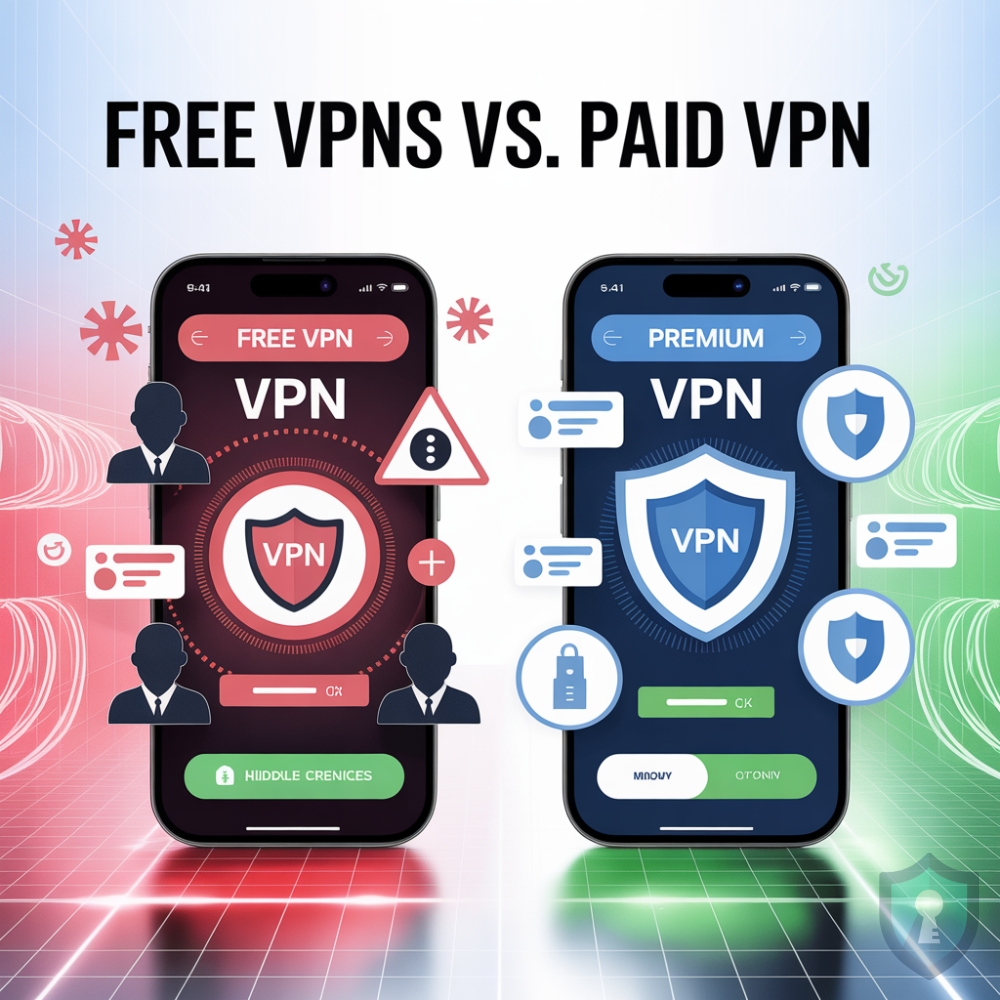
If you search for a VPN on the Apple App Store or Google Play Store, you will be bombarded with thousands of apps boasting names like “Super Free VPN,” “Turbo Privacy,” and “Secure Proxy Free.” They all promise the exact same military-grade encryption and total anonymity as the premium services, but without the monthly subscription fee.
It sounds like a great deal, but in the world of cybersecurity, there is an absolute, undeniable rule: If a product is free, you are the product.
Running a global network of high-speed servers requires millions of dollars in infrastructure, maintenance, and bandwidth costs. If a company is not charging you a subscription fee, they are making their money somewhere else.
If you are trying to improve your digital OPSEC (Operational Security), here is the investigator’s breakdown of why downloading a free VPN is often more dangerous than not using one at all.
How Free VPNs Actually Make Money
As we established in our guide on how a VPN actually works, a VPN routes all of your internet traffic through a private server. This means the VPN company can see everything your Internet Service Provider (ISP) would normally see.
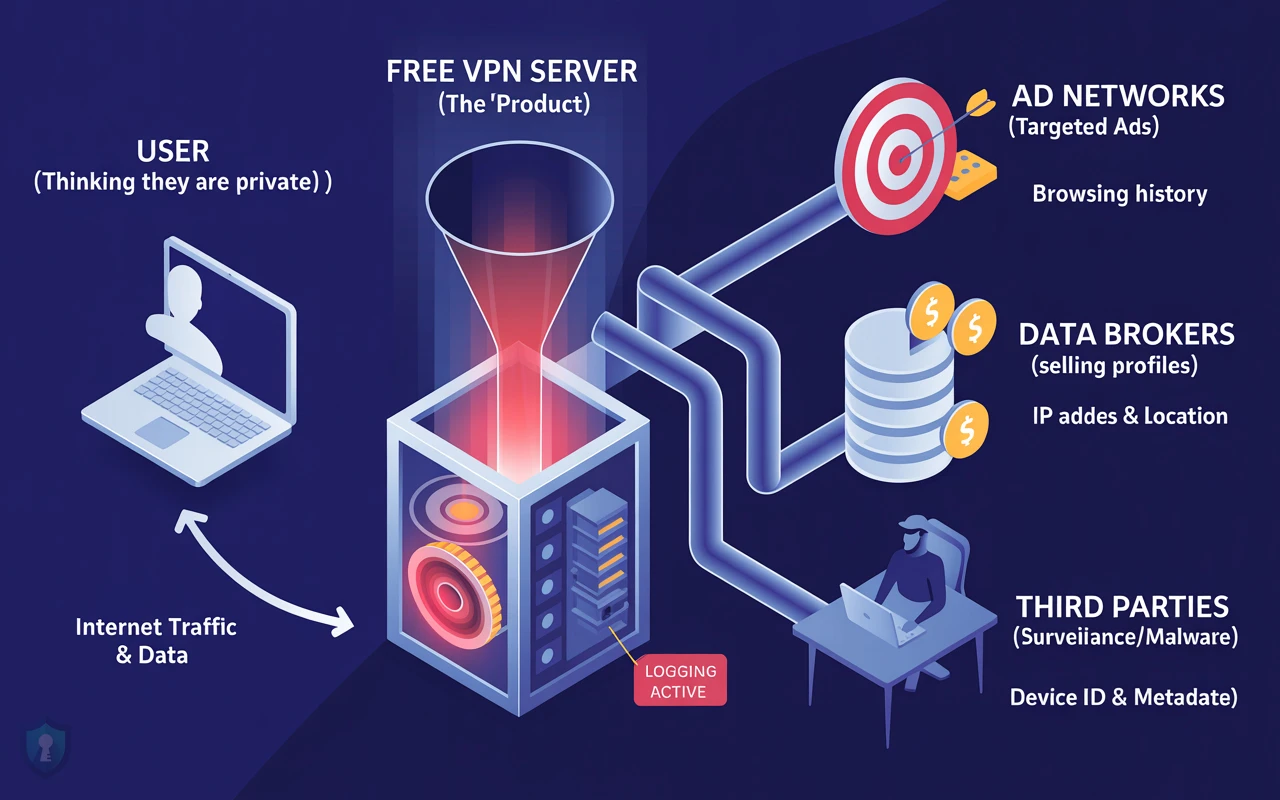
When you use a paid VPN, you are paying them to immediately delete that data. When you use a free VPN, you are giving them permission to monetize it.
1. Data Harvesting and Brokering
The most common way free VPNs generate revenue is by logging your browsing history, connection timestamps, and device identifiers. They bundle this highly sensitive data into massive profiles and sell it to third-party advertising agencies and data brokers. You downloaded the app to stop tracking, but the app itself became the ultimate tracker.
2. Injecting Targeted Ads (and Malware)
Many free VPNs manipulate your web traffic. While your data is passing through their servers, they can actively inject their own advertisements into the websites you are visiting. Even worse, cybersecurity researchers routinely find that free, unvetted VPN apps contain hidden malware, spyware, and tracking libraries directly embedded in their code.
3. Selling Your Bandwidth
In some of the most malicious cases, free VPNs operate as botnets. Instead of routing your traffic through a dedicated server, the app routes other users’ traffic through your home internet connection. If another user commits a cybercrime while routed through your IP address, law enforcement will trace the activity back to your router.
The Security Flaws of Free VPNs
Even if a free VPN isn’t actively malicious, it is almost always technically inferior.
- Weak Encryption: To save on processing power and server costs, free VPNs often use outdated encryption protocols (like PPTP) which can be easily cracked by hackers on public Wi-Fi networks.
- IP and DNS Leaks: A poorly coded VPN app will frequently “leak” your real IP address or DNS requests to the surface web, completely destroying your anonymity without you ever realizing it.
- Throttled Speeds: Free services intentionally bottleneck your internet speed and cap your monthly data usage to force you into buying their premium upgrades.
Is There Ever a Safe Free VPN?
Yes, but only under a specific business model known as “Freemium.” Reputable companies (like ProtonVPN, developed by the same team behind the highly secure Proton Mail) offer a stripped-down, free version of their paid product.
They do not sell your data or inject ads. Instead, they subsidize the cost of the free users with the revenue generated by their paid users. The catch? Freemium VPNs will heavily restrict your speeds, block streaming services, and limit you to only two or three server locations.
If you absolutely cannot afford a premium VPN but require absolute anonymity to bypass government censorship, do not use a free app store VPN. Instead, utilize the decentralized, community-run Tor Browser.
Summary: The OPSEC Reality
| Feature | Premium Paid VPN | Typical “Free” VPN |
|---|---|---|
| Business Model | Subscription Revenue | Selling User Data & Ads |
| Logging Policy | Strict No-Logs (Audited) | Logs everything you do |
| Speeds & Bandwidth | Unlimited & High-Speed | Heavily throttled / Capped |
| Security Risk | Very Low | Dangerously High |
The Bottom Line
A VPN is a tool designed to establish trust. You are removing your trust from your local internet provider and placing it entirely in the hands of the VPN company. Trusting a random, anonymous developer with a “free” app to protect your sensitive data is a critical OPSEC failure. If you value your digital privacy, a paid, audited VPN is the only legitimate option.
Frequently Asked Questions (FAQs)
Are free VPNs safe for banking?
Absolutely not. You should never log into your bank account or handle sensitive financial information while connected to a free VPN. Many free VPNs have been caught logging user keystrokes, intercepting unencrypted data, and utilizing outdated security protocols that leave your connection vulnerable to interception.
Do free VPNs actually hide your IP address?
While a free VPN will temporarily mask your IP address from the websites you visit, they are notorious for suffering from “IP leaks.” Furthermore, because the free VPN company logs your real IP address in their own databases, your identity is never truly hidden from governments or data brokers.
What is the best free alternative to a VPN?
If you need to bypass censorship or protect your identity for free, the Tor Browser is the safest alternative. Unlike a commercial VPN, Tor is a decentralized network run by volunteers. It encrypts your traffic three times and routes it across the globe, ensuring no single entity can track your digital footprint.